Emergency Budgeting & Cash Flow Triage: Navigating Unexpected Income Disruptions
When an unexpected financial crisis strikes—such as sudden job loss, debilitating medical illness, or critical vehicle failure—how should you reallocate limited household cash flow to survive without triggering compounding debt spirals? Conventional personal finance rules like the 50/30/20 budget assume a stable, predictable income stream. In a severe liquidity emergency, standard rules must immediately give way to Defensive Cash Flow Triage. Establishing a rigorous spending hierarchy protects your family's essential survival needs, prevents catastrophic utility shutoffs or housing evictions, and shields your household balance sheet during acute volatility.
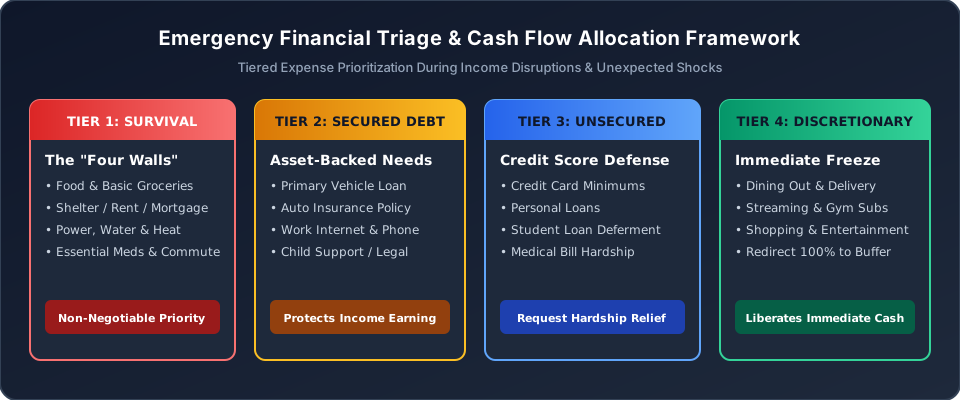
1. Tier 1 Priority: Securing the "Four Walls" First
The concept of the Four Walls represents the non-negotiable core of human survival and dignity. In any severe liquidity crunch, 100% of remaining cash on hand must be sequestered to fund these four essential categories before a single dollar is sent to any other creditor:
- Food & Basic Nutrition: Eliminate all restaurant dining, takeout convenience, and premium packaged goods. Transition immediately to a bulk staple grocery regimen (rice, beans, whole grains, frozen vegetables, and low-cost proteins). Utilize local community food banks and apply immediately for Supplemental Nutrition Assistance Program (SNAP) benefits if income falls below federal poverty thresholds.
- Shelter & Primary Housing: Paying your rent or mortgage preserves your roof. Falling behind on rent can trigger judicial eviction proceedings in 30 to 60 days depending on municipal statutes. If confronting unavoidable housing shortfalls, communicate proactively with your landlord or mortgage servicer before the rent due date to request written forbearance or payment restructuring under statutory hardship rules.
- Basic Home Utilities: Ensure electric, natural gas, heating oil, and municipal water services remain active. Familiarize yourself with state-mandated utility shutoff moratoria: many states strictly prohibit utility disconnections during extreme winter or summer months or when a household member has certified medical vulnerabilities.
- Essential Transportation & Critical Healthcare: Maintain vehicle fuel, public transit passes, and active auto insurance required to commute to work or attend job interviews. Prioritize vital prescription maintenance medications and urgent healthcare co-pays over any discretionary expense.
2. Tier 2: Secured Assets & Income Mobility Protection
Once the Four Walls are funded, allocate secondary liquidity toward protecting assets that directly enable income generation:
Primary Vehicle Loan or Lease: Unlike unsecured credit cards where default results in negative credit marks, auto loans are secured by collateral. In many jurisdictions, lenders can initiate non-judicial repossession after just 30 to 60 days of payment delinquency without prior court approval. If vehicle repossession would destroy your ability to commute to employment, keeping auto payments current or securing a formal 60-day lender deferral is a critical defensive priority.
Essential Communications Infrastructure: In modern job searching and remote employment, maintaining active cellular phone service and home broadband connectivity is essential. Audit your mobile plan immediately, downgrading to low-cost MVNO carriers (e.g., Mint Mobile, Consumer Cellular) or applying for federal broadband assistance programs.
3. Tier 3 & 4: Subordinating Unsecured Debt & Hardship Programs
When cash is scarce, unsecured debts—including revolving credit cards, personal signature loans, retail charge accounts, and medical bills—must be systematically subordinated to the lowest priority tier.
Proactive Creditor Hardship Program Negotiation:
Rather than simply defaulting silently, contact your credit card issuers and personal loan servicers before your payment becomes 30 days delinquent. Request enrollment in their internal Financial Hardship Program. Major national card issuers maintain formal assistance programs that can:
- Temporarily reduce your interest rate to 0% to 9.99% for 6 to 12 months.
- Waive recurring monthly late fees and over-limit charges.
- Report your account to credit bureaus as "current under paying as agreed" or "affected by natural/financial hardship" rather than delinquent.
4. The 48-Hour Household Expense Freeze & Audit Protocol
Execute an immediate, ruthless audit of all outgoing recurring cash outflows. Print the last 90 days of checking account and credit card statements, highlighting and categorizing every line item:
| Expense Category | Triage Tier | Immediate Action Protocol | Consequence of Non-Payment |
|---|---|---|---|
| Groceries & Food | Tier 1 (Critical) | Shift to staple bulk foods; apply for SNAP/food banks. | Nutritional distress and compromised health. |
| Rent / Mortgage | Tier 1 (Critical) | Pay on time or request written landlord forbearance. | Eviction filing in 30–60 days; foreclosure. |
| Basic Utilities | Tier 1 (Critical) | Apply for LIHEAP energy grants; invoke weather moratoria. | Service shutoff after statutory notice (15–45 days). |
| Primary Vehicle Loan | Tier 2 (Secured) | Request 60-day loan deferral or prioritize payment. | Repossession risk after 30–60 days delinquency. |
| Unsecured Credit Cards | Tier 3 (Subordinated) | Request hardship rate freeze; withhold payments if needed. | Credit score drops; lawsuit possible after 6–18 mos. |
| Streaming & Subscriptions | Tier 4 (Discretionary) | Cancel immediately across all digital accounts. | Zero adverse consequence; instant monthly savings. |
5. Constructing the $1,000 Starter Reserve & Accessing Public Safety Nets
The primary objective during the stabilization phase of emergency budgeting is establishing an initial $1,000 Starter Cash Buffer. This cash buffer must be held in a completely separate, high-yield FDIC-insured savings account that is disconnected from your primary debit card. Having a liquid $1,000 cushion prevents minor household hiccups (such as an unexpected plumbing repair or a replacement tire) from forcing you to resort to predatory high-cost credit.
Simultaneously, explore all available municipal, state, and federal safety net programs designed to bridge acute economic hardship:
- Low-Income Home Energy Assistance Program (LIHEAP): Federal grant program that provides direct utility payments for qualifying low-income households, shielding families from winter heating or summer cooling shutoffs.
- Lifeline & Affordable Connectivity: Subsidized telecommunications programs providing discounted voice and high-speed broadband internet access to qualifying individuals.
- State Unemployment Insurance (UI): File for state unemployment benefits immediately upon layoff or involuntary reduction in hours. Do not delay submission, as initial processing can take two to four weeks before weekly disbursements begin.
Cash 4 You Live Editorial & Consumer Advocacy Board
Our financial literacy researchers and regulatory analysts publish independent guides on Truth in Lending APR compliance, credit union PAL alternatives, and state usury statutes.